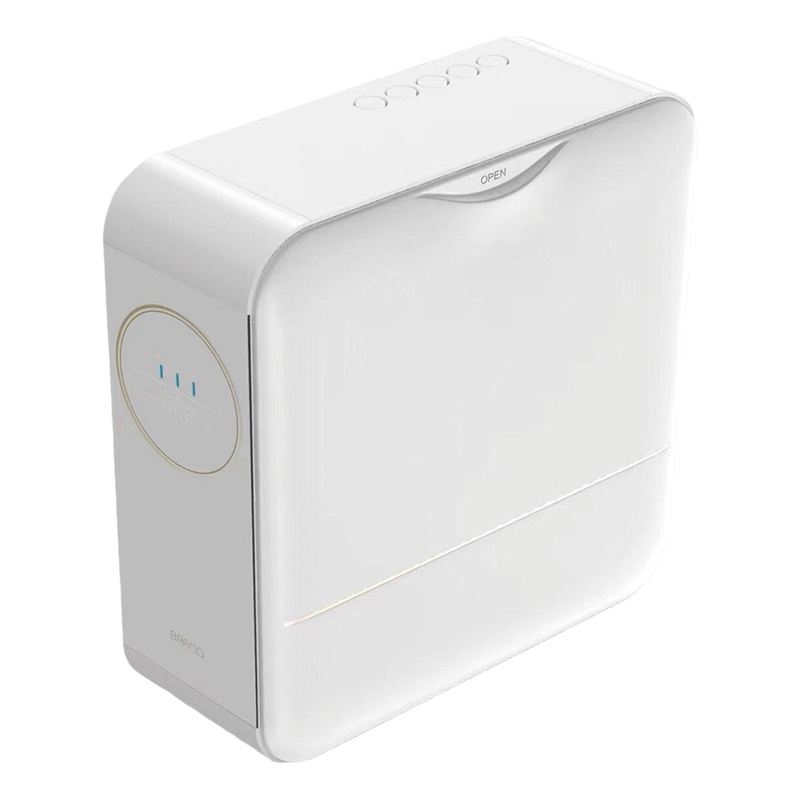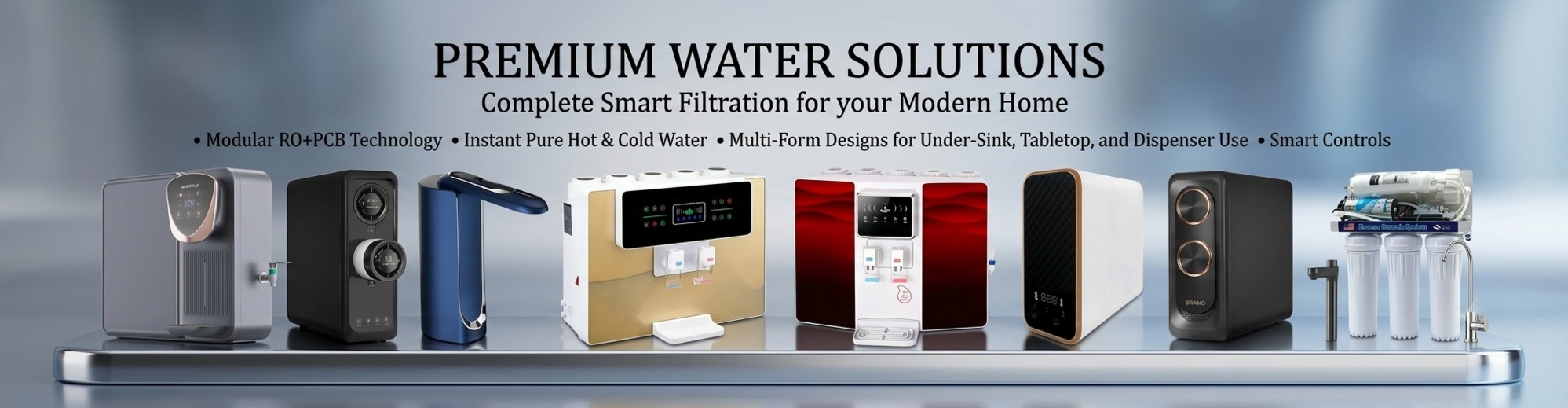
To verify the actual flow rate of a tankless reverse osmosis (RO) purifier, measure the volume delivered at the installed faucet over a timed interval. Record the first draw after standby and the steady flow separately, under feed-water conditions agreed with the supplier.
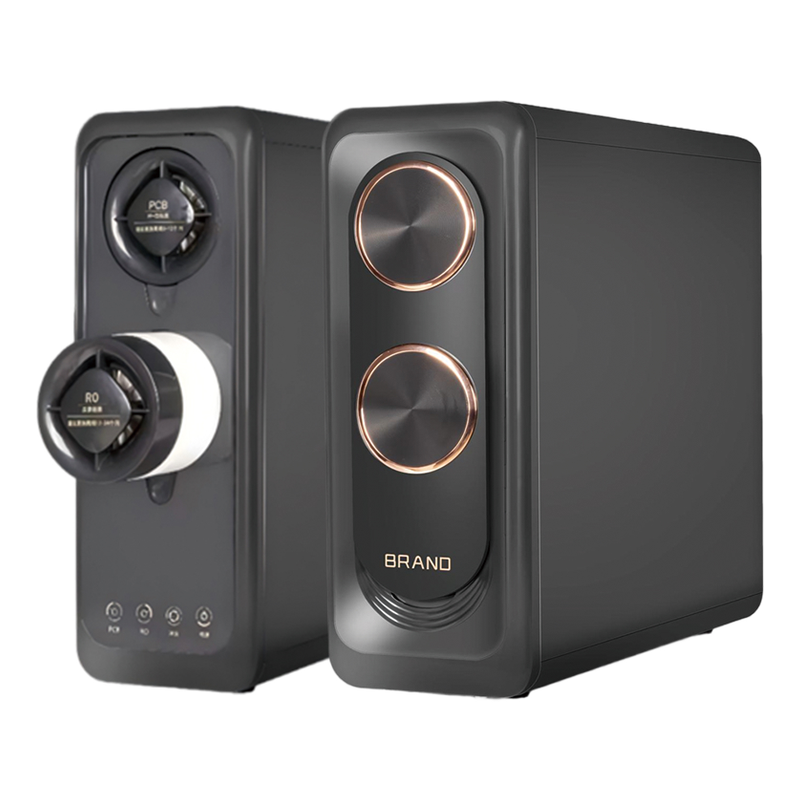
Product illustration: Qiteng M80200-800G under-sink RO purifier.
1. Agree on the test setup
Use the faucet, tubing, filters and power supply specified for the production order. Install and flush the sample according to its instructions. Record the feed-water temperature, inlet pressure while dispensing and feed-water TDS if measured. Ask the supplier to state the conditions behind its GPD rating and faucet flow specification.
2. Measure first draw and steady flow
After an agreed standby period, open the faucet and use a graduated container and timer to record how long it takes to fill the first liter. Note any startup delay. Once the flow stabilizes, collect water over an agreed interval within the model's operating limits. Calculate liters per minute as liters collected × 60 ÷ elapsed seconds. Repeat with the same setup when comparing samples.
3. Put the acceptance criteria in writing
Agree on the maximum first-liter fill time, minimum steady flow and test conditions before approving the sample. Keep the approved record so the same procedure can be repeated on units from the production batch.
Sample acceptance record: Model and revision ___ | Faucet and tubing ___ | Feed-water temperature ___ | Inlet pressure during draw ___ | Feed-water TDS ___ | Standby time ___ | First-liter fill time ___ | Steady collection volume and time ___ | Calculated L/min ___ | Pass/fail ___.
For a Qiteng OEM/ODM inquiry, share the target market, expected inlet conditions and required faucet flow so the sample review can be planned around your application.